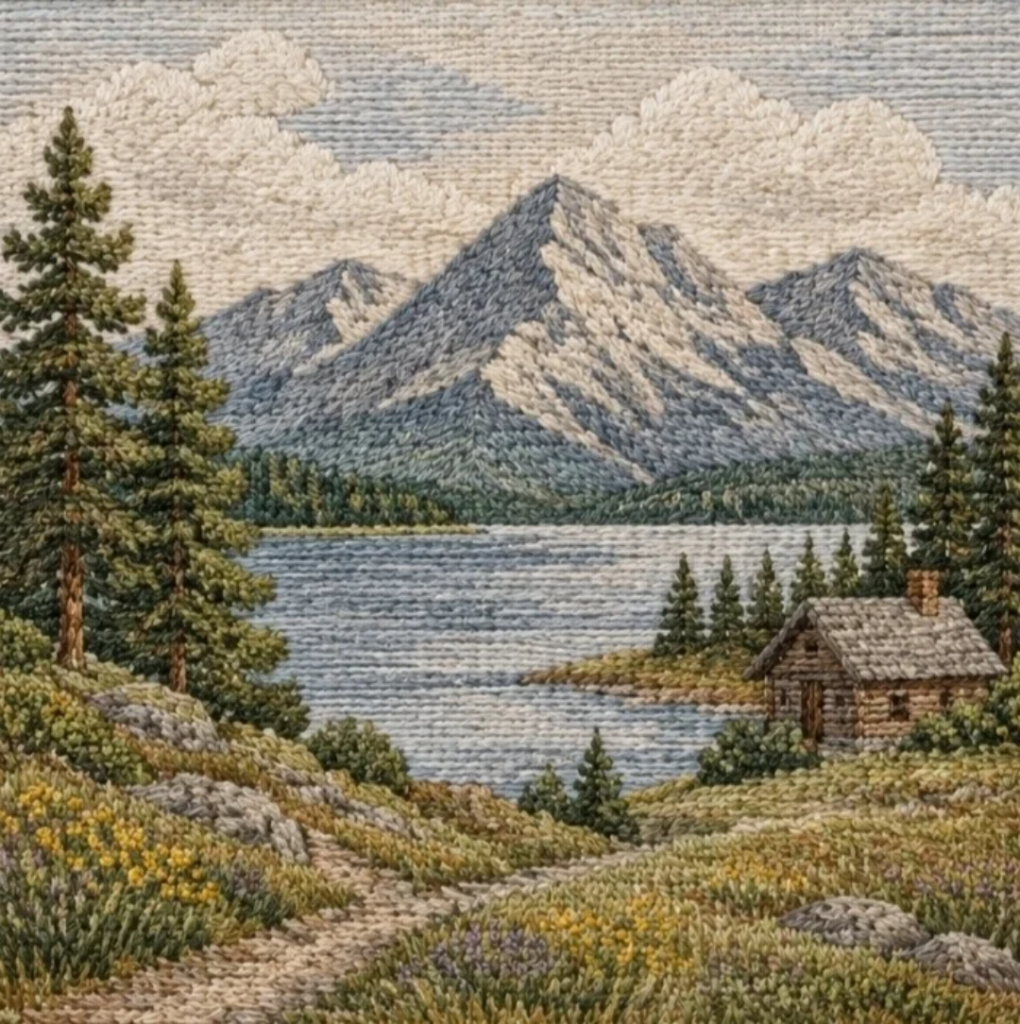
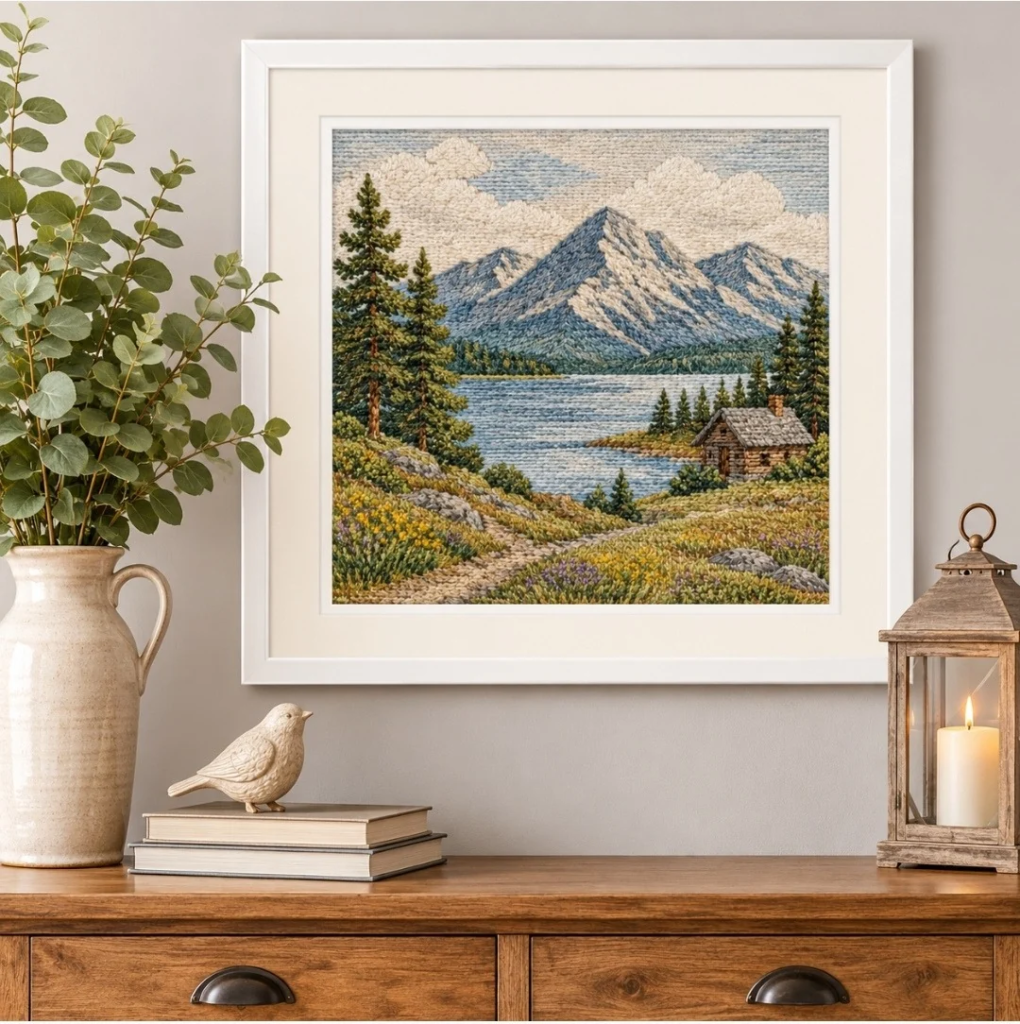
Needlework is something special. Whether it’s a cross-stitch created stitch by stitch, an intricate embroidery or a tapestry filled with colour and detail, every piece represents time, patience and creativity. Many pieces also hold sentimental value, making them something to treasure for years to come.
Here at Decor and Framing Studio, we believe that framing cross-stitches, embroideries and tapestries should be approached with care, taking the character of the textile into account and choosing a presentation that complements the work.
With thoughtful framing, your needlework can become a beautiful feature in your home while remaining true to the craftsmanship that makes it unique.
Why Frame Your Needlework?
Unlike a printed picture, needlework has texture, dimension and a distinctive character. The individual stitches create patterns and surfaces that can look quite different depending on the light and how the piece is displayed.
Leaving needlework unframed may suit some projects, but a carefully planned framing solution can give it a finished appearance and make it easier to display on a wall.
Framing also provides an opportunity to coordinate the artwork with your interior. A traditional wooden frame may suit a classic tapestry, while a clean, contemporary frame can give a landscape cross-stitch a fresh, modern look.
Choosing the Right Frame and Mount
The frame should complement the needlework rather than compete with it. Consider the colours in the stitching, the style of the design and the overall effect you want to achieve.
A natural wood finish can bring warmth to countryside scenes and traditional designs. White, cream and other neutral finishes can create a lighter, more contemporary presentation, while darker frames may provide contrast for richer colours.
A mount can introduce breathing space around the stitched design and help define the artwork within the frame. Its width and colour should be chosen to suit the individual piece. Not every project needs a wide mount, and some needlework may be better presented using a different framing approach.
The aim is to enhance the work without distracting from its detail.
Why the Fabric Edges Matter
One important consideration when framing needlework is the fabric surrounding the stitched design.
The unstitched edges are not necessarily waste material. They may be needed to secure and support the textile during framing, depending on its construction and condition. Cutting them away simply to make the piece fit a frame can compromise the fabric and make future handling more difficult.
Before framing begins, the size of the entire textile, the position of the stitching and the available fabric around the design should all be considered.
The needlework should be supported appropriately, without unnecessary tension, stretching or damage. The best approach will depend on the fabric, the condition of the piece and how it needs to be presented.
Framing Cross-Stitches, Embroideries and Tapestries
Although these forms of needlework share many characteristics, each has its own requirements.
Cross-stitch often features clearly defined patterns and carefully arranged colours. A simple frame and complementary mount can help the design stand out.
Embroidery can include raised stitches, delicate threads and decorative details. The framing solution should take its texture and depth into account.
Tapestries may feature larger designs, varied fibres and substantial areas of woven or stitched detail. Their weight, size and construction can influence the choice of support and frame.
In every case, the goal is to find a presentation that suits the textile rather than applying the same solution to every piece.
Display Your Needlework with Pride
Your needlework may have taken weeks, months or even years to complete. Perhaps it was made as a gift, passed down through your family or created simply for the pleasure of making something by hand.
Whatever its story, it deserves thoughtful consideration when it comes to displaying it.
We understand that every piece of artwork has its own character. When choosing how to frame your cross-stitch, embroidery or tapestry, consider the design, the fabric, the colours and the setting in which it will be displayed.
Let your needlework take its place on your wall, beautifully presented and ready to be enjoyed for years to come.
Give Your Needlework the Finish It Deserves
Have a cross-stitch, embroidery or tapestry you’d love to display? Let’s find a framing style that complements your work